Chalk, Cathedrals and the Case for Champagne: A Few Days in Reims and Epernay
I went to Champagne half-expecting to leave with a slightly lighter wallet and a better tan. I left with something more inconvenient: an actual change of mind about a wine I used to quietly resent paying for.
Let me start with the obvious. Champagne, the region, is not one place you visit but two towns you split your time between, and how you divide them shapes the whole trip. Reims is the grand one, the cathedral city, the seat of the historic houses. Epernay is the pretty one, a single boulevard of marble mansions built on the money underneath it. I based myself in Reims and made the day trip to Epernay. Having done it that way, I would flip it if wine is the point rather than the setting.
Staying in Reims
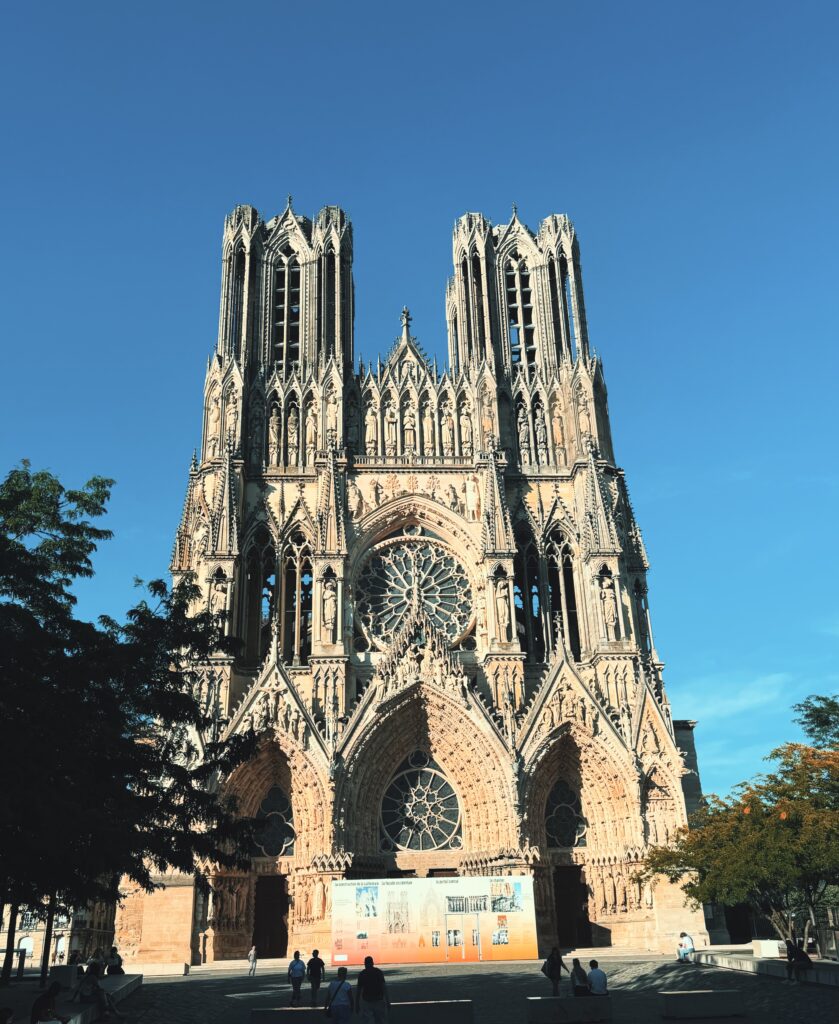
We took an Airbnb at the foot of Notre-Dame de Reims, which is not a sentence you get to write often. The cathedral is the one where French kings were crowned for the better part of a thousand years, and having it as the view from the flat rather than a thing you queue to see does something to the rhythm of a trip. You wander out for bread and it is just there, enormous and pale gold, going about its business.
What Reims is not, it turns out, is a nightlife town. Neither is Epernay. Both go quiet early and stay that way. If you are picturing long loud evenings spilling out of wine bars, adjust the picture. These are places that work in daylight: cellars in the morning, lunch that runs long, a slow walk in the afternoon. The evenings are for a good meal and an early night, which after a morning 30 metres underground is exactly what you want anyway.
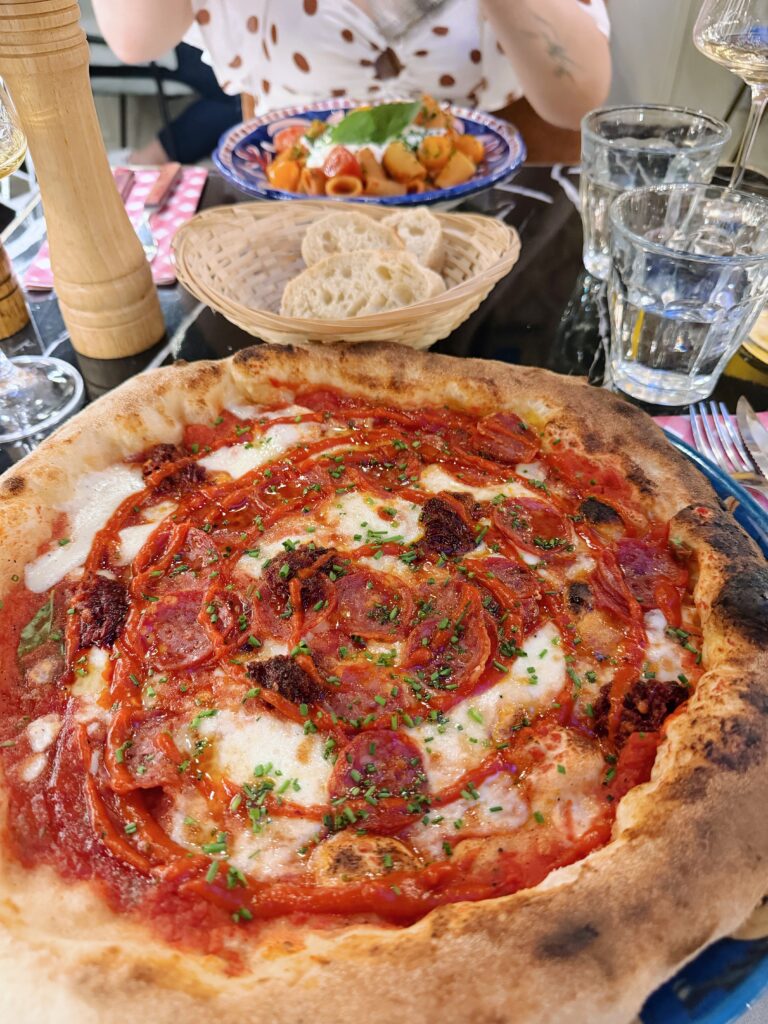
On food, we kept it small and unfussy and were well served for it. Alba, an Italian, did the job on a night when nobody wanted to think too hard. Bistro des Anges was the better of the two, the kind of neighbourhood bistro that reminds you the French floor of competence sits higher than most. Neither is a destination in itself. Both are the sort of honest local cooking that a wine trip actually needs, because you have already spent the day drinking the good stuff and your palate wants a break, not a competition.
Down in the chalk at Ruinart
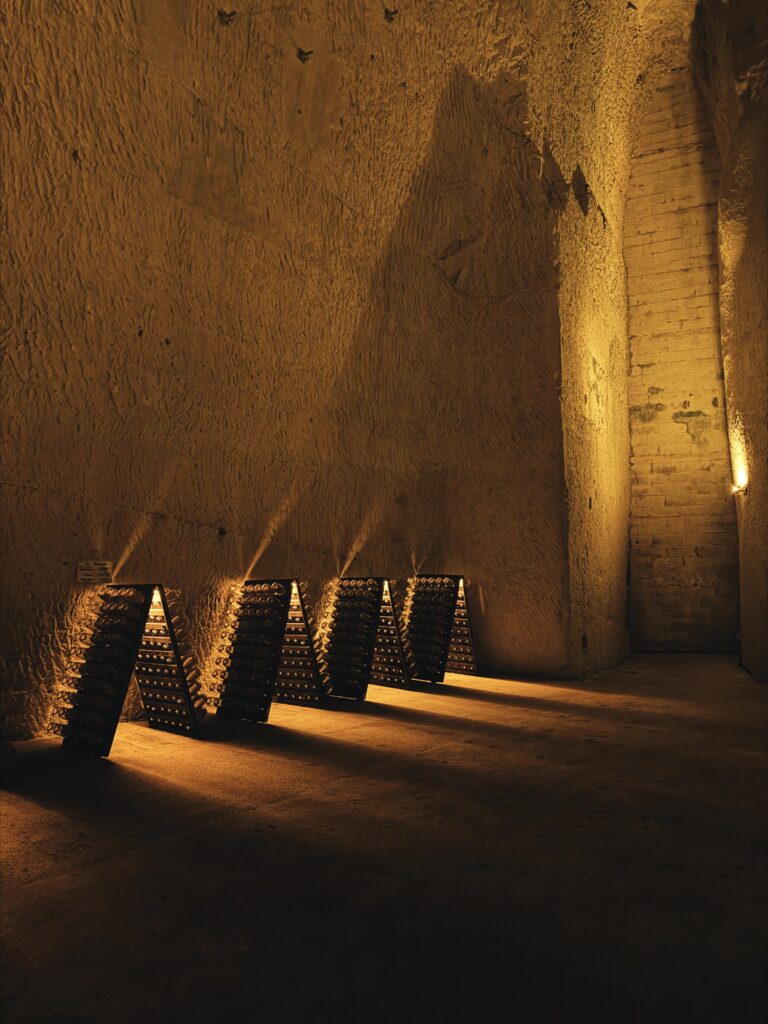
If you do one thing in Reims, do Ruinart. It was the visual and intellectual high point of the whole trip, and a good deal of that is down to a guide called Marco, who was excellent. He talked us through Ruinart, of course, but he also drew on his own background as a sommelier and his time at other houses, which meant the tour never slid into brochure mode. You were getting a person’s actual knowledge, not a script.
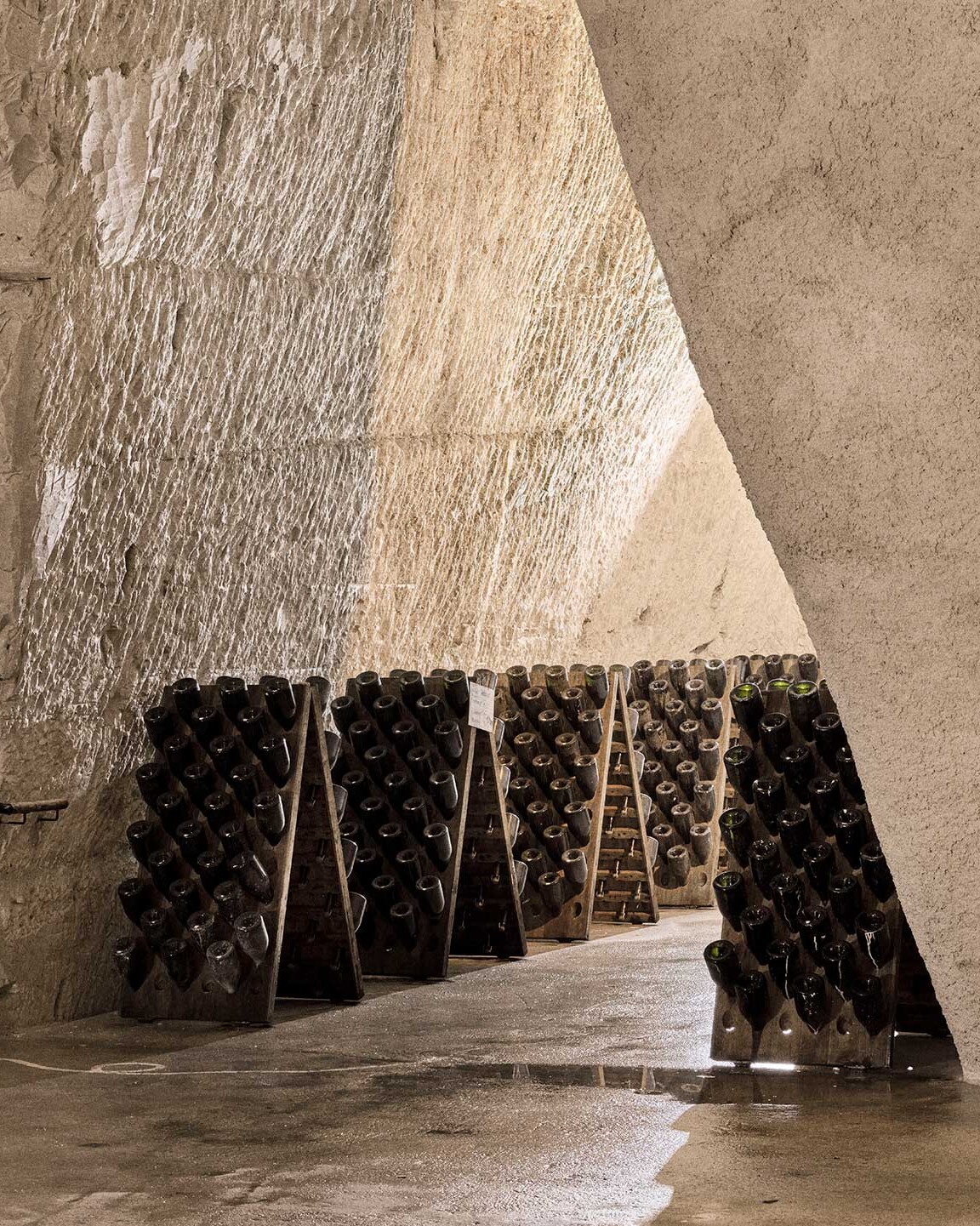
The heart of the visit is the crayères, the chalk cellars, and they are genuinely hard to describe without sounding like you are exaggerating. These are ancient chalk quarries, dug out as far back as the Gallo-Roman era, now a UNESCO World Heritage site. Eight kilometres of galleries run beneath the house. The tallest reaches nearly 38 metres, which is, near enough, the height of the nave in the cathedral up top. So you spend your morning standing inside a chalk cathedral that mirrors the stone one above ground, both of them built over centuries, both of them essentially about patience.
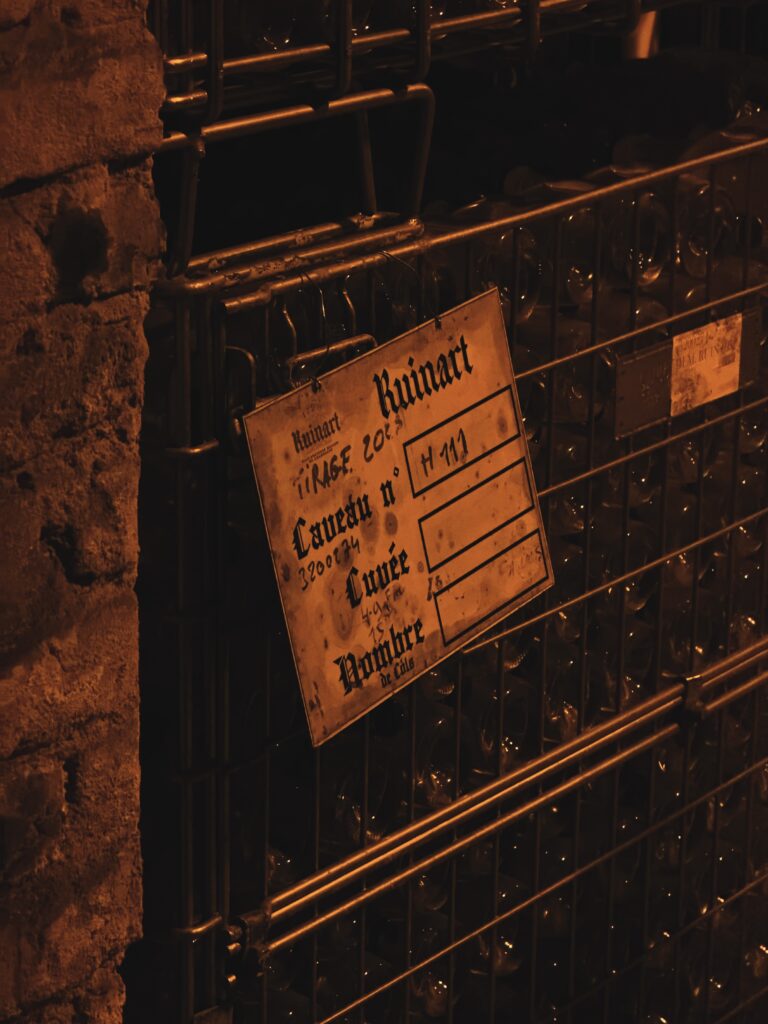
That is the thing the cellars teach you before anyone pours a glass. Champagne is a slow business. The chalk holds a constant 11 degrees and steady humidity, with no vibration and no light, and the bottles sit down there in the dark for years. Three to four years for the non-vintage. Nine to ten, on average, for a vintage. Dom Ruinart, the prestige cuvée, spends a minimum of a decade underground before anyone is allowed near it. You cannot rush any of it, and standing in the quiet with hundreds of thousands of bottles ageing around you, the pricing starts to make a different kind of sense.
The house that fabric built
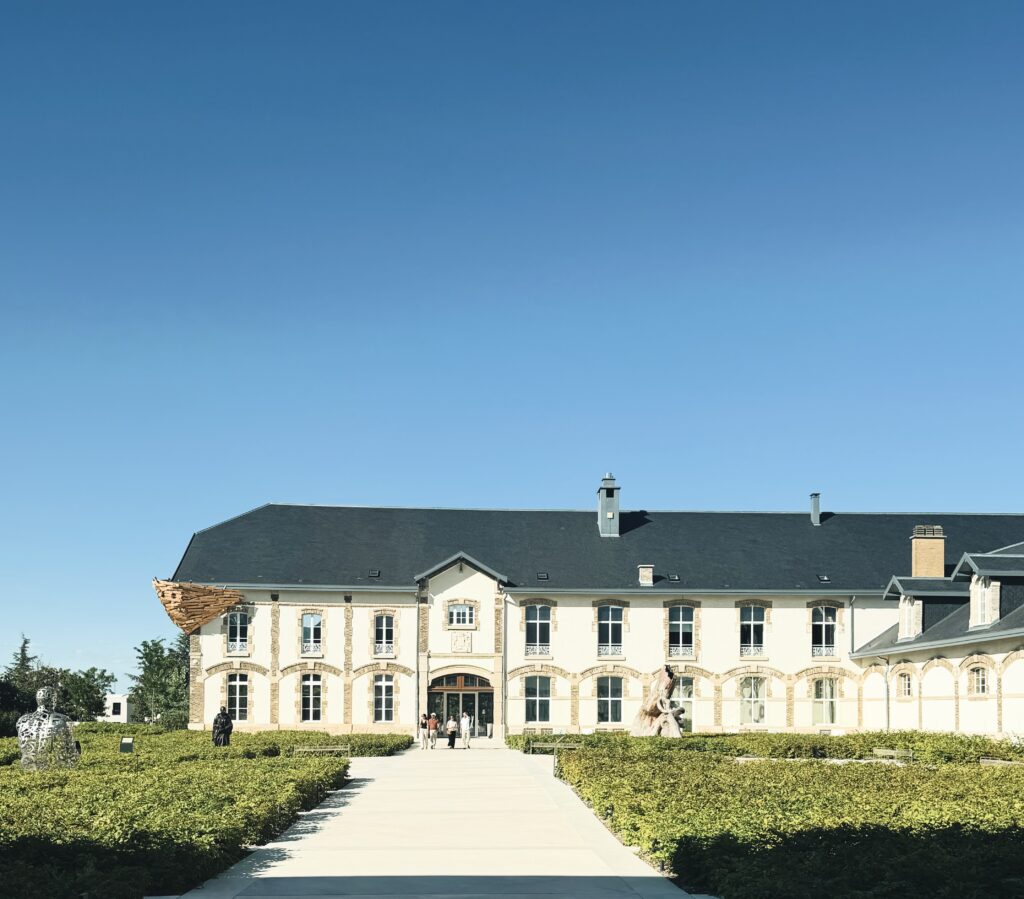
The history is worth a detour, because Ruinart’s origin story is stranger and better than the usual founding-father stuff.
The Ruinarts were not winemakers. They were cloth merchants, drapers in Reims. The wine came into the family through Dom Thierry Ruinart, a Benedictine monk born in 1657 who worked alongside Dom Pérignon and came back from Paris convinced that this new “wine with bubbles” beloved of young aristocrats had a serious future. He never lived to see it. His nephew Nicolas founded the house in 1729, twenty years after the monk’s death, and only because the law had finally caught up: until a 1728 edict from Louis XV, wine could legally only be transported in barrels, which is useless for a wine that needs its second fermentation in the bottle. One royal signature and the entire Champagne trade became possible. Ruinart was first through the door.
Even then, the bubbles started life as a freebie. Nicolas gave bottles away as a gift to customers buying his fabric. Within six years the gift had outgrown the business, and in 1735 he dropped cloth entirely to make Champagne full time. One of the earliest shipments went to Elsinore in Denmark, which means some of the first commercial Champagne ever exported landed at Hamlet’s castle. The house also produced the world’s first rosé Champagne, with records showing it being made by 1764.
The later history is no less dramatic. When Reims was shelled to rubble in the First World War, André Ruinart moved the whole operation down into the crayères. When the cellars then flooded, he ran the business from a raft. In the Second World War the occupying Germans emptied the cellars, and for decades the house could not pour you a single bottle of its own pre-war history. Then, in 2023, eighteen bottles of the 1926 vintage turned up in the cellars of the Paul Bocuse restaurant in Lyon, gifted to the legendary chef decades earlier and quietly sat there ever since. The restaurant gave them back. They are now the oldest bottles the house owns, and this year, a century on, the team have been opening them. Marco had tasted the 1926 a few weeks before our visit and reported it still alive, still showing ripe and candied fruit. A hundred years in glass and it had not given up. If you want the entire argument for Champagne pricing in one anecdote, that is probably it.
One more thread Marco pulled on that stuck with me: the art. In 1896 the house commissioned Alphonse Mucha, the Art Nouveau master, to create a poster, one of the first advertisements of its kind in France. That relationship with artists never stopped, and the crayères are now dotted with contemporary commissions, which is a strange and lovely thing to encounter 30 metres down in Roman chalk.
Epernay and the Avenue de Champagne
Epernay is the day trip, and it is worth doing, though I would not build the trip around it. The Avenue de Champagne is the draw, a straight run of grand houses sitting on top of more than a hundred kilometres of cellars. It is a strange, quiet sort of grand. You are walking past enormous mansions that are essentially the polished lids on vast underground cities of wine.
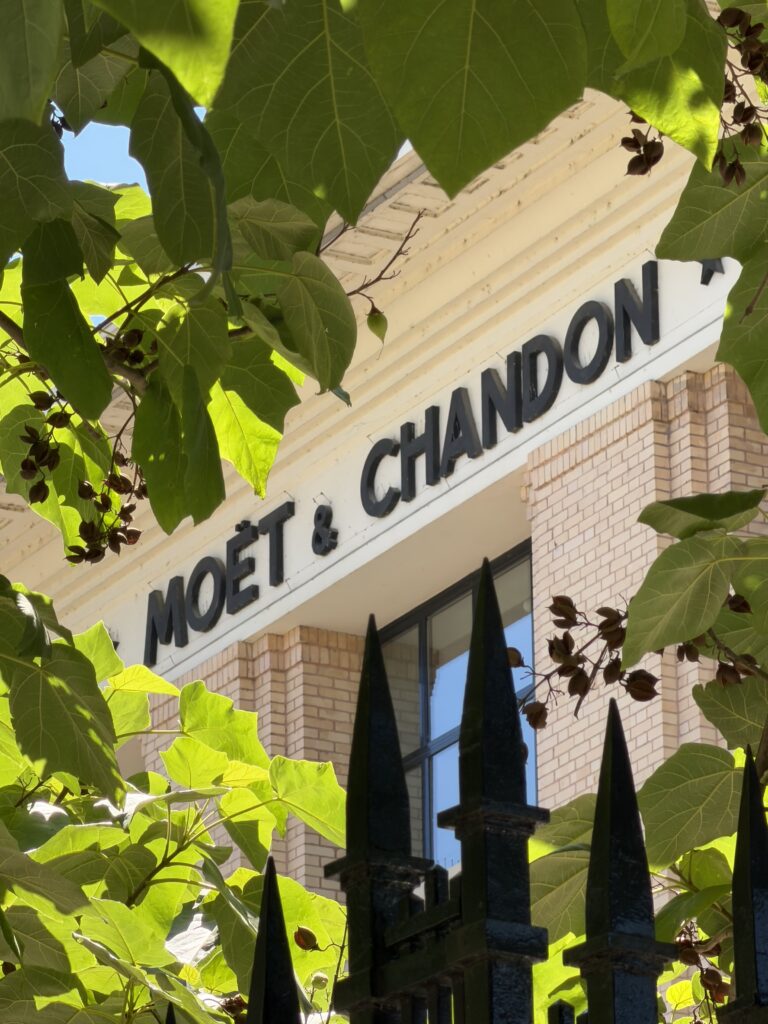
We visited Moet and Pol Roger here, the big names, and they deliver what the big names deliver: scale, polish, a well-oiled sense of occasion. Pol Roger in particular carries itself with the kind of understated confidence that comes from having been Churchill’s house of choice and never needing to mention it more than once. These visits are impressive. They are also, if I am honest, where I started to notice what I was missing.
What I would do differently
Here is my one real regret, and it is worth passing on. I did not visit enough grower Champagnes.
For the uninitiated, the split is roughly this. The grande marque houses, the Moets and Ruinarts, mostly buy grapes from a large number of growers across many villages and blend them into a consistent house style, year after year. Grower Champagne, by contrast, is made by the people who farm the vines, from their own fruit, usually from a single village or even a single plot. It is the difference between a blend built for reliability and a wine that tastes of one specific piece of ground.
We did get to a few smaller names, Esterlin, Michel Maillard and Leclerc among them, and those were the visits where you felt closest to the actual soil. But I let the famous houses eat too much of the itinerary. If I went again, I would keep Ruinart as the anchor, because it genuinely is essential, and then spend the rest of the time in the villages with the growers, in the Montagne de Reims and the Cote des Blancs, tasting wines made a few hundred metres from where you are standing. That is where the value lives, both in the glass and in the pound.
The bit where I changed my mind
I came into this as a fairly sceptical drinker. If I am being straight about it, I used to look at the price of a good Champagne and quietly turn my nose up. Expensive fizz for people who wanted to be seen buying expensive fizz, was roughly the position.
I do not hold that position any more.
Seeing the process at Ruinart, the years in the chalk, the sheer patience of it, the way a good Blanc de Blancs is built rather than merely bottled, closed the argument for me. Blanc de Blancs, for anyone new to the term, is Champagne made entirely from Chardonnay, and a good one has a precision and a chalky tension to it that I now understand I was paying for all along and simply had not clocked. I get the vintages now. I get why the prices climb. It is not a markup on a party drink. It is time, land and a very slow craft, priced accordingly.
You do not have to spend a fortune to enjoy Champagne, and the grower bottles prove you can find real character without the grande marque premium. But I no longer begrudge the premium either, because now I know what sits underneath it. Roughly 38 metres underneath it, to be precise.
Go for the cellars. Stay for the chalk. And book more growers than you think you need.