Same Chalk, Different Country: What I Got Wrong About English Sparkling
I spent a few days in Champagne earlier this year and came home having changed my mind about the price of the stuff. What I did not expect was that the trip would leave me with a second, more awkward problem: if the argument for Champagne is chalk, patience and the traditional method, then quite a lot of that argument also applies about a hundred miles north of Reims, in Kent.
Let me start where the scepticism came from, because I had plenty. English sparkling wine has spent twenty years being talked up by people with an obvious interest in talking it up. It costs the same as a decent Champagne, or more. It has none of the history. And the phrase “surprisingly good for an English wine” has always struck me as the sort of compliment nobody wants.
I no longer think that is a fair position. I also do not think the answer is a simple one, so this is not going to be a flag-waving piece.
The chalk does not stop at Calais
Here is the geological fact that reframes the whole conversation, and which I somehow managed to reach my late thirties without properly absorbing.
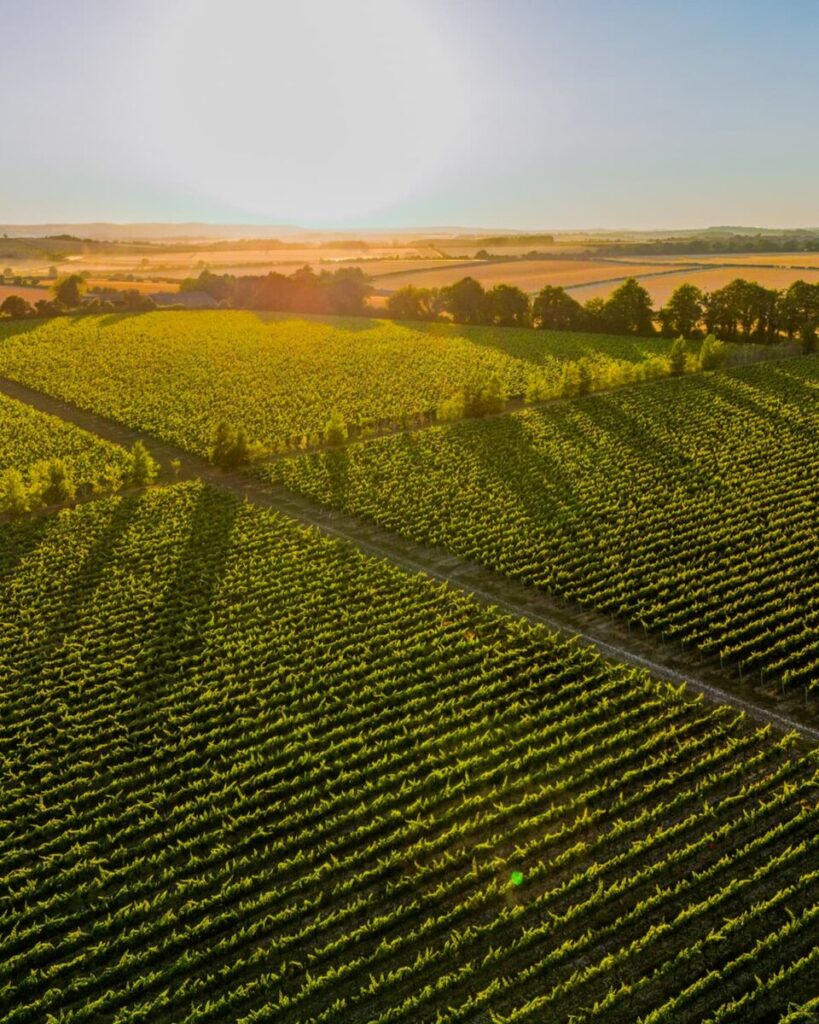
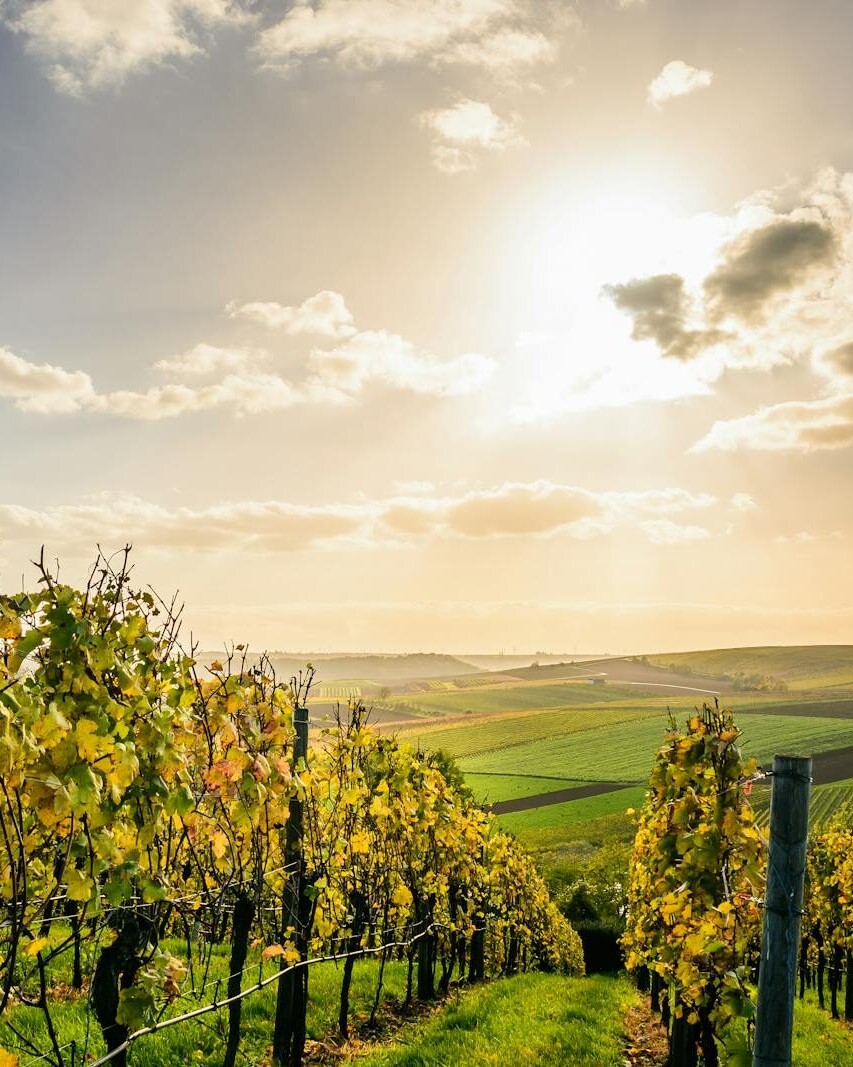
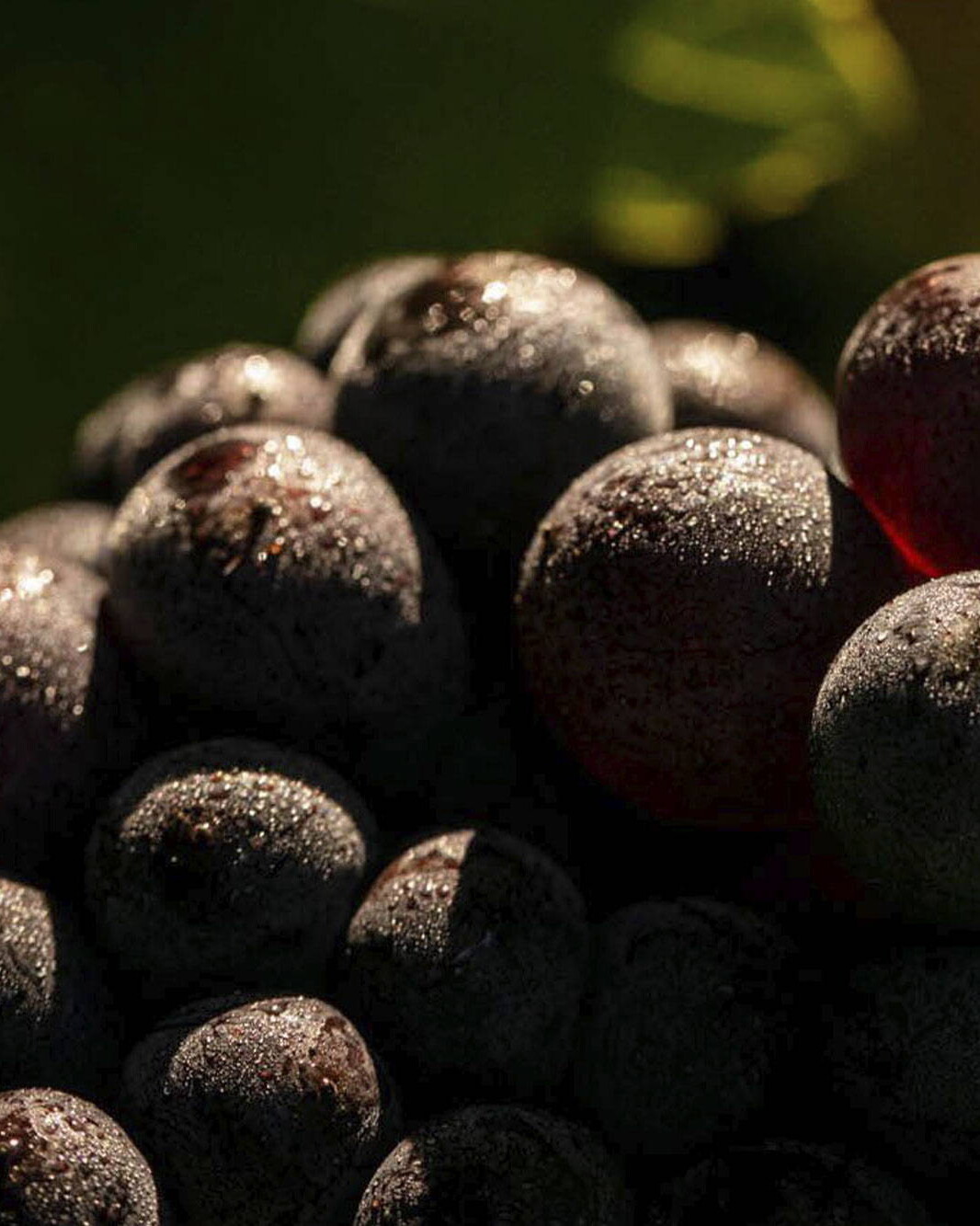
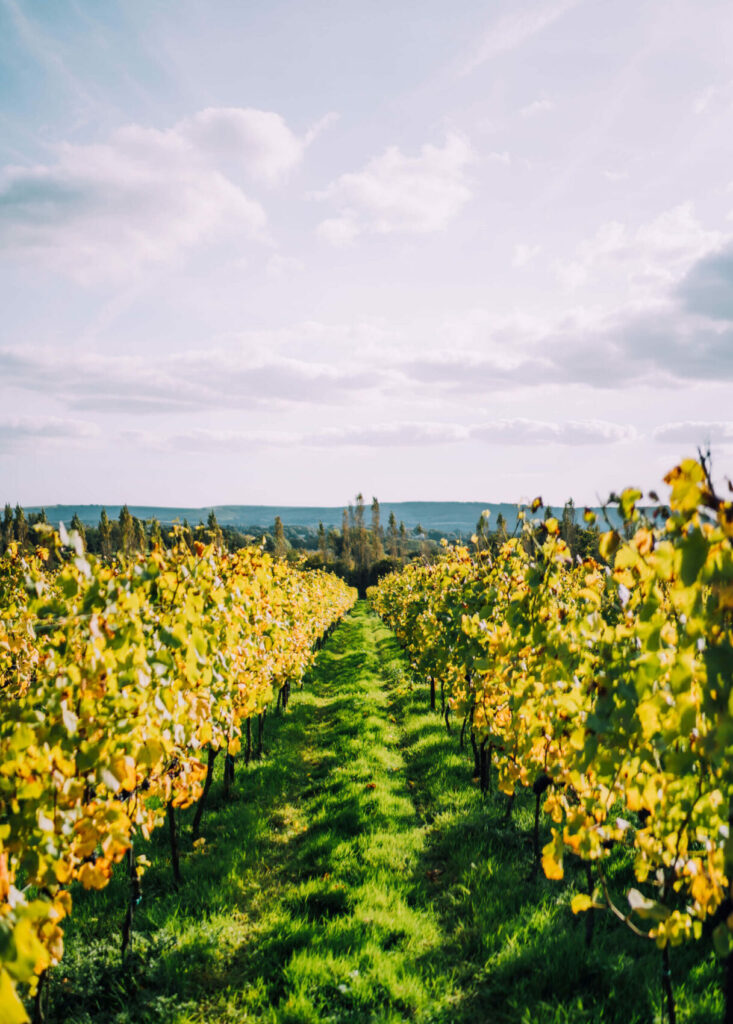
The chalk that sits under the Champagne vineyards is not local to Champagne. It is part of a seam that runs beneath the Channel and comes back up on the other side, as the North and South Downs. Stand in a vineyard in Kent or Sussex and you are, in a real sense, standing on the same rock as the crayères at Ruinart. The grapes are the same three: Chardonnay, Pinot Noir and Pinot Meunier. The method is the same: second fermentation in the bottle, years on the lees, riddling, disgorgement.
What was missing was warmth, and that has changed. Southern England now gets the growing season that Champagne had a few decades ago. This is not a happy fact about the world, and it is worth saying so out loud rather than pretending it is a charming coincidence. But it is the reason the wine works.
So the honest framing is not “England is having a go at Champagne”. It is closer to “the same rock, the same grapes and the same technique, now with a climate that permits it”.
The blind tasting that should have been bigger news
If you want one piece of evidence to put in front of a sceptic, it is the Battle of the Bubbles, held at the London Wine Fair in 2025.
The format was designed to be unforgiving. Twenty-six of the world’s most serious sparkling wines, tasted blind by sixteen judges including Oz Clarke, Susie Barrie MW and Peter Richards MW. The Champagne contingent was not a token one: Dom Pérignon 2013, Krug Grande Cuvée, Taittinger Comtes de Champagne 2013, Dom Ruinart 2010, Bollinger R.D. 2008.
The top two wines overall were English. Nyetimber’s 1086 Prestige Cuvée 2010 scored highest of anything in the room. Gusbourne’s 51 Degrees North 2016 came second. Dom Pérignon 2013 was third.
Now the part that gets left out of the triumphant write-ups, and which I think matters more. On aggregate scores across the whole flight, Champagne still won as a category, and won comfortably, by something like fifteen per cent. Which tells you the real story: England can now produce individual bottles that beat anything in the world, but Champagne’s depth, its floor, its sheer consistency across dozens of houses, has not been matched. Both of those things are true at once, and only one of them makes a good headline.
For what it is worth, the pattern has repeated elsewhere. Nyetimber’s head winemaker Cherie Spriggs has twice been named Sparkling Winemaker of the Year at the International Wine Challenge, the first person from outside Champagne and the first woman to take it.
The French bought in, and that is the loudest signal of all
Awards are arguable. Capital is not.
In 2015, Champagne Taittinger and their UK partner Hatch Mansfield bought land in Chilham, near Canterbury, and became the first Champagne house to plant an English vineyard from scratch. The site was chosen on the same criteria you would use in Champagne: chalk, south facing, below a hundred metres. It was a fruit farm before that, apples and soft fruit, sold off to raise capital after the family got burned dealing with supermarkets. There is something quite pleasing about apple money turning into wine, in a region that had spent its whole life making cider country jokes.
The estate is called Domaine Evremond, after Charles de Saint-Évremond, the Frenchman who talked Champagne into fashion at the court of Charles II and who is buried in Poets’ Corner in Westminster Abbey. It is a properly deliberate piece of naming: the English did not discover Champagne recently, they were early customers.
The winery is two thirds underground, with a chalk cellar built to hold up to a million and a half bottles. First vines went in in 2017. The first real harvest was 2019. The first wine, Classic Cuvée Edition I, only reached the market in spring 2025: a blend of 55% Pinot Noir, 35% Chardonnay and 10% Pinot Meunier, mostly 2020 fruit with 2019 reserve, bottled in mid 2021 and not disgorged until late 2024. Over three years on the lees before anyone was allowed a glass.
Ten years from land purchase to first bottle. Pommery have invested here too. If you want to know whether the French take English sparkling seriously, that is your answer, and it costs a great deal more than a press release.
The bit nobody puts on the tasting notes
Here is where I would push back on the cheerleading, because the category is having a harder year than the awards suggest.
In September 2025, Ridgeview went into administration. Ridgeview is not a hobby vineyard. It is one of the founding names of modern English sparkling, poured at a state banquet, roughly four hundred thousand bottles a year. It was bought out of administration in February 2026 by an investor consortium, with the head winemaker staying in post, so the wine continues. But a business of that size falling over sent a chill through the whole sector, and rightly.
The underlying picture explains why. There are now over 1,100 vineyards and 238 wineries in the UK, but sales are heavily concentrated: a couple of dozen producers account for the overwhelming majority of what actually sells. Plantings have raced ahead of demand. Supermarket discounting is squeezing the middle. The on-trade, which is where premium fizz gets sold at a proper margin, has had a brutal couple of years.
You end up with an industry producing its best ever wine at exactly the moment the economics turned against it. Growing more grapes was the easy part. Building brands that people will pay forty pounds for, in a country where most drinkers still reach for Prosecco at nine, is the hard part, and it is nowhere near finished.
So is it worth the money?
Straight answer: it depends entirely on where you are shopping, and the honest version is less flattering than the industry would like.
At the very bottom, Champagne still wins. You can find genuine non-vintage Champagne at twenty-five to thirty pounds, and English sparkling at that price does not reliably match it. Smaller volumes, higher labour costs and the enormous upfront cost of establishing a vineyard make competing down there close to impossible.
At thirty-five to fifty pounds, the picture flips. This is where English sparkling is properly competitive, and where I think the genuine value sits. You are getting three or more years on the lees, hand harvesting, traditional method, from producers who cannot afford to make a bad wine because they do not have the brand to absorb it.
Above a hundred pounds, the prestige cuvées have now proved they can stand in a blind line-up against Champagne’s best and win. Whether you want to spend that is a separate question, and I would note that the same money in Champagne buys you a wine with forty more years of track record.
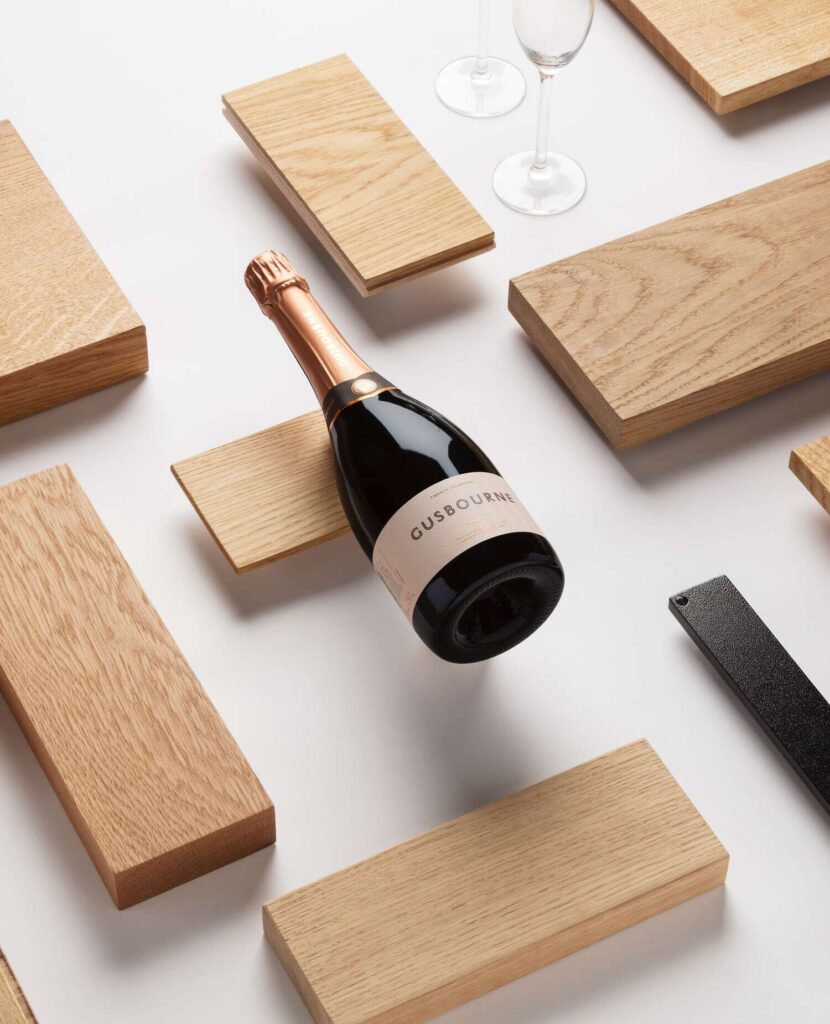
The names worth your attention, if you are starting: Nyetimber and Gusbourne as the benchmarks, Langham out in Dorset, Hambledon, Black Chalk and Hattingley Valley in Hampshire, Wiston and Rathfinny in Sussex. Buy the Blanc de Blancs where you can. English Chardonnay on chalk is the thing this country does best, and it is not close.
What I would do differently
My regret in Champagne was that I gave too much of the itinerary to the famous houses and not enough to the growers. The English version of that mistake is buying the category entirely off a supermarket shelf.
Nearly all of these estates are within a couple of hours of London, most of them will sell you a tour and a tasting for less than the cost of a bottle, and wine tourism here has grown by more than half since 2022 for a reason. There is no equivalent to the crayères, obviously. Nobody has eight kilometres of Gallo-Roman quarry to show you. But you get something Champagne cannot offer, which is the ability to meet the person who made it and ask them a direct question, without a script and without a marketing department in the room.
The other thing I would do, and this is the useful one: taste it blind. Put an English bottle against a Champagne at the same price, cover the labels, and get someone else to pour. Almost every strong opinion anyone holds about this category, mine included, turns out to be an opinion about the label.
The bit where I changed my mind
I came into this expecting to conclude that English sparkling is a decent wine sold at a patriotic premium.
I do not think that any more, but the reason is not the one I expected. It is not that the wine has caught up, though at the top it plainly has. It is that I had the pricing argument backwards. I was treating Champagne’s price as the natural baseline and English wine as the thing requiring justification, when in fact both are made the same way, on the same rock, at the same cost, with the same years of waiting. The gap between them was never about the wine. It was about four hundred years of one of them being very good at telling you it was worth it.
That does not mean English sparkling has earned the right to charge whatever it likes. Plenty of it is overpriced, the market is about to force a reckoning on that, and a few names will not survive it. But when I now see an English bottle at thirty-eight pounds next to a Champagne at thirty-eight pounds, I no longer assume the French one is the serious purchase and the English one is the gesture.
Same chalk. Same grapes. Same patience. Different postcode, and a rather younger story.
Buy the Blanc de Blancs. Taste it blind. And go and see one before the shakeout takes a few of them.